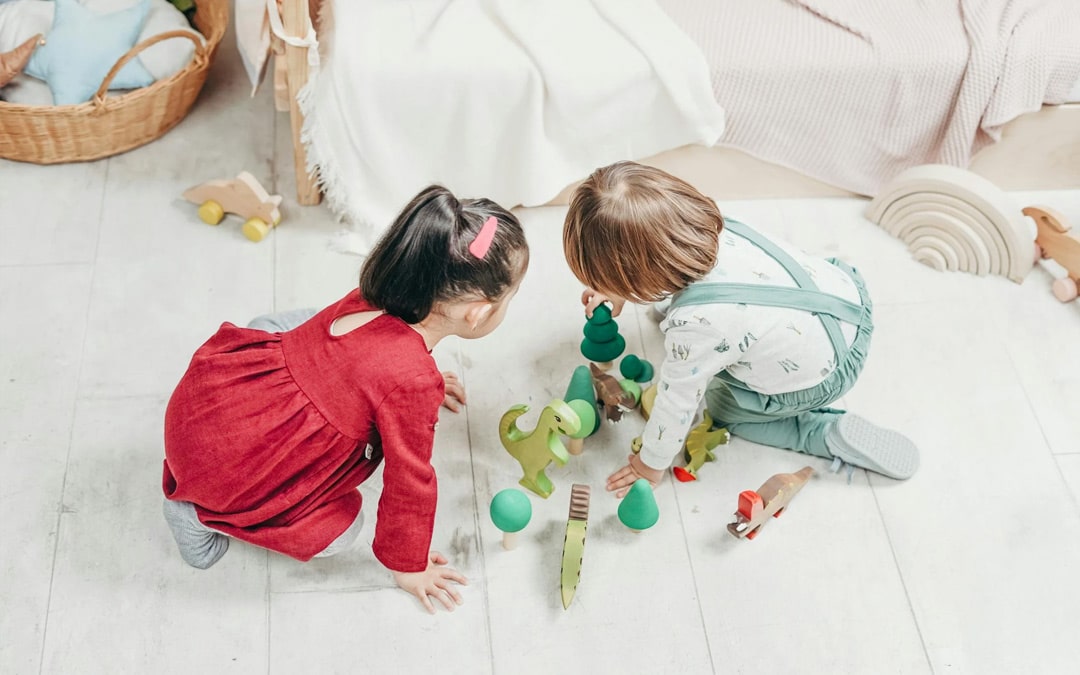
Play is the work of the child said educator Maria Montessori
To you and I, it might be “just” play. But to a child it’s so much more. Play is really the language of children. It is the way they make sense of our world. In this article we hope to clarify some of the invaluable life skills children develop through the art of play. Yes, it is an art- in that it is deeply personal and unique. So here goes:
Play is the main way they role play life:
Wonder why playing shop, doctor and ice cream store are so popular among toddlers and preschoolers? Well, it is the simplest way they make sense of real life situations in a safe way and in a way that is accessible to them. They play the roles they aspire to while speaking their language of play. So the next time you wonder “will they ever tire from playing cashier?” The answer is “yes”, once they have felt they have mastered that role.
Play teaches them social-emotional skills:
Playing with other kids their age teaches them valuable interpersonal skills. Negotiating with peers their age teaches them skills around how to accommodate another’s needs, understanding different perspectives, taking turns. Not just that, they begin to notice the impact of their action on others – that’s the start of feeling empathy. Understanding other’s perspectives is the foundation for lifelong social and emotional development.
Play and play dates allow them to exercise agency:
Too often they go through life trying to fit into our world. Play provides children the autonomy and agency to control and influence their choices.
Kids process emotions through play:
Wonder why your child has returned home after a seemingly great day at school, only to lash out. It’s because they’ve been holding it together all too well at school and feel safe enough to unload their heavy packs with you. That’s well and good. But if you feel like your 20 question strategy is taking you nowhere, try initiating a game, something fun they enjoy and watch the conversation flow (tears roll and backpacks lighter).
Play supports mastery:
Play allows children to practise routines, skills and supports mastery. Most of us naively believe that a sport class is play. Let’s unpick that. A class has structure, rules, innate and social expectations around performance as well as social and team etiquette. It’s just like a classroom but on a field.
However, it is free play outside those classes in an unstructured environment that allows for mastery.
So, with all this in mind, what can we as parents, and caregivers do? Here’s a few suggestions:
Schedule free play
Just as you schedule those classes, schedule free play. Prioritise it. Be diligent about it. Ideally schedule a few of these outdoors.
Invite kids for play dates
It helps them build relationships outside the classroom while helping them develop those vital socio-emotional skills.
Join in their play
Yes! You’re never too old to play. We unlearned this art that was innate to us. Get silly, join in their fun. Learn their rules, allow them to coach you and support them develop mastery. Let them lead the way. This autonomy builds confidence and independence.
By creating an environment that promotes free play, we as parents can help their children develop essential life skills, foster creativity, build strong social connections, achieve mastery. It if the surest way to provide kids a chance at a childhood they will remember, a strong base for the rest of their lives. So next time you hear someone say “That’s just child play”- remember there is nothing “JUST” about it. It is the work of their world, if anything there is something we can learn from them – ‘work’ can still be achieved while being in flow.
If you are looking for some parenting support, please reach out to us at
Lisel Varley & AM Team
MsC., MoC. Member of: ACA, BACP
Please refer to the AM articles page for Lisel and the AM Team articles.
Please complete the AMindset intake form to start therapy with an AM team member. Our therapists offer a FREE 20-minute introductory session for new clients.
If you are not quite ready, please click here to subscribe to the AMindset Newsletter with articles and podcasts to learn more about your mental health and how AM can help you.
Disclaimer: This article is for informational purposes only and is not a substitute for professional medical advice, diagnosis, or treatment. Always seek the advice of your physician or qualified mental health provider with any questions you may have regarding a medical condition.

 : Executive Coach & Leadership Consultant