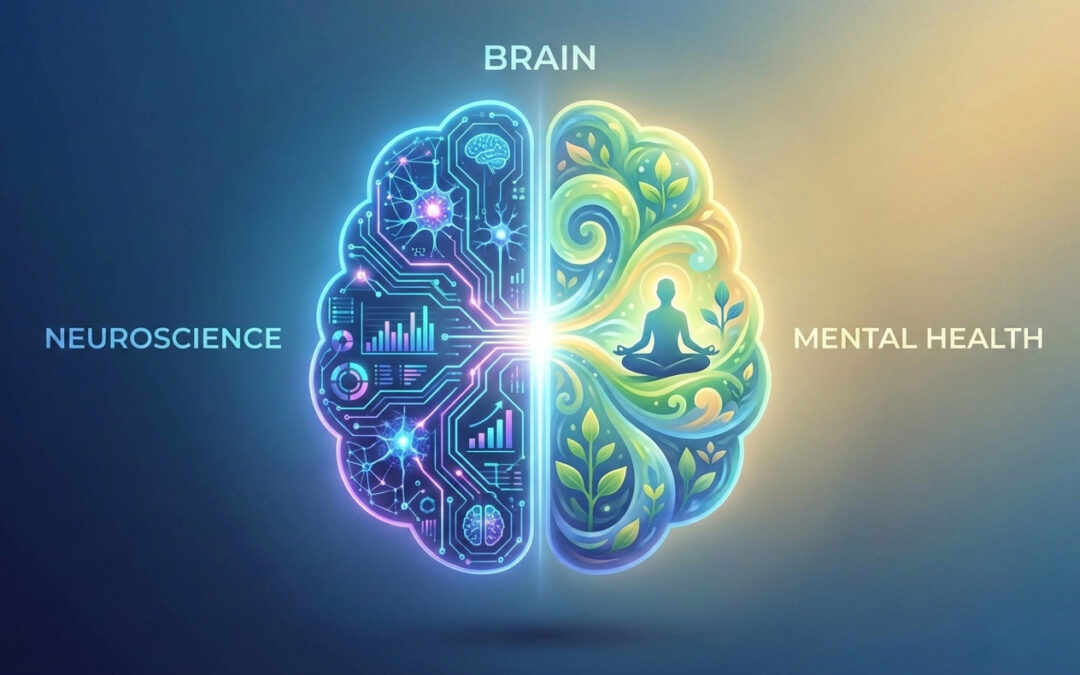
Brain Awareness Week—observed each March—is an ideal moment to celebrate advances in neuroscience and consider their growing impact on mental health care. Over the past two decades, neuroscience has shifted how clinicians and researchers understand conditions such as depression, anxiety, ADHD, and PTSD. Rather than relying solely on symptom clusters, modern approaches examine underlying neural circuits, brain rhythms, and patterns of connectivity. This brain-centered perspective is enabling more precise, personalised interventions that target the mechanisms driving distress and dysfunction.
Key technological advances are driving this transformation. Improved neuroimaging (fMRI, PET) and electrophysiological techniques (EEG) reveal how different brain regions communicate during mood regulation, attention, and stress responses. Computational models help translate complex data into meaningful profiles that can guide individualized treatment choices. These insights have encouraged a move away from one-size-fits-all approaches toward interventions tailored to a person’s neural profile, life context, and treatment goals.
Neurofeedback training exemplifies this neuroscience-informed, skill-building approach. Neurofeedback is a non-invasive method that uses real-time measurements of brain activity—most commonly EEG—to provide immediate feedback to the individual. Through guided sessions, participants learn to recognize and modify their brain’s activity patterns. Over time, this training can strengthen regulatory networks involved in attention, emotional control, and arousal modulation.
Clinical and research findings suggest neurofeedback may reduce symptoms for a range of conditions. For example, targeted training protocols have shown promise in improving attention and executive function in ADHD, reducing anxiety and rumination in mood disorders, and enhancing emotional regulation after trauma. Neurofeedback is often used as a complement to psychotherapy and medication, offering an avenue to build self-regulation skills that produce lasting changes in brain function and behaviour. Its nonpharmacological nature makes it particularly attractive for individuals seeking alternatives or adjuncts to medication, or for young people where medication decisions are more complex.
Neurofeedback’s effectiveness depends on careful assessment and individualized protocol design. A skilled practitioner will evaluate a client’s history, symptoms, and baseline brain activity to recommend an appropriate training plan. Sessions typically involve short blocks of focused practice where the individual receives auditory or visual feedback tied to desired brain states. Over weeks or months, the brain learns to adopt healthier patterns, often accompanied by improvements in mood, focus, sleep, and overall functioning.
Beyond clinical outcomes, integrating neuroscience into mental health care fosters empowerment. Understanding that many mental health challenges are rooted in neurobiology can reduce stigma and encourage proactive engagement in evidence-based strategies for recovery and resilience. As research continues, combining neurofeedback with cognitive-behavioural therapy, lifestyle medicine, and neuromodulation techniques promises more comprehensive, multimodal treatment pathways.
For those interested in exploring neurofeedback, AMindset’s neurofeedback expert (link to Nicolson Siu Yat Fan website page) is available for appointments to assess suitability and design individualized training plans. Whether the goal is improving concentration, reducing anxiety, or supporting emotional recovery, a consultation can clarify how neurofeedback might fit within a broader, evidence-informed care strategy. During Brain Awareness Week and beyond, neuroscience offers exciting, pragmatic tools to support mental wellbeing—helping people build the skills their brains need to thrive.

 : Executive Coach & Leadership Consultant